Your Ultimate Resource for Cold Plunge Safety and Best Practices
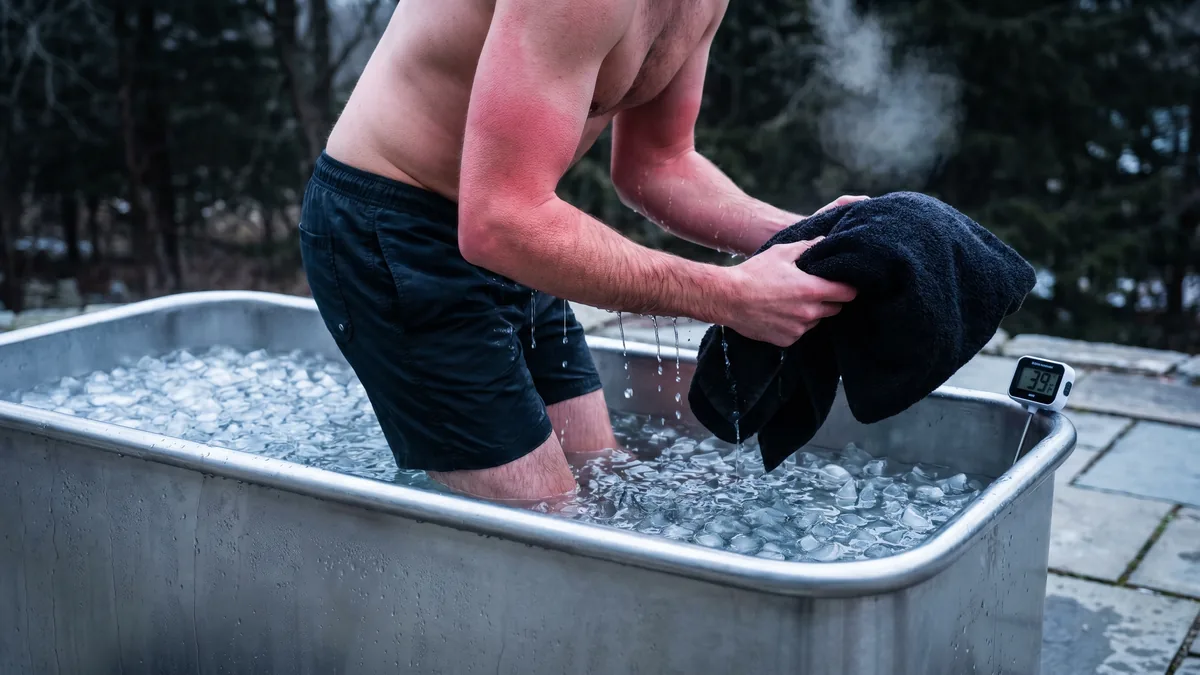
Picture this: someone walks into a cold plunge facility for the first time, skips the staff orientation because they've watched a few YouTube videos, drops straight into 39°F water, and holds their breath because they think that's what you're supposed to do. Within 30 seconds, cold shock response kicks in, heart rate spikes, breathing becomes uncontrollable, and the whole thing becomes genuinely dangerous. This happens more than it should. Cold water immersion is not inherently risky, but treating it like a casual dip in a backyard pool absolutely is. Done correctly, with real preparation and proper facility support, it's one of the more effective recovery tools available right now.
Cold plunge therapy has moved well past the "athlete niche" phase. A quick look at directory data makes this obvious: there are currently 1,934 cold plunge and ice bath businesses listed across the platform, spanning everything from boutique cryotherapy studios and contrast therapy studios to full-scale recovery wellness centers and plunge pool spas. That number reflects serious national growth. Five years ago, finding a dedicated cold immersion center outside a major metro area was genuinely difficult. Not anymore.
This article covers what you need to know before stepping into any cold water therapy center, whether it's your first session or your fiftieth. Safety protocols, what real facilities look like versus what they should look like, industry data, and a practical framework for building a cold therapy routine that actually works long-term.
Understanding Cold Plunge Therapy: What It Is and How It Works
Cold water immersion works on a few overlapping physiological mechanisms, and understanding even the basics makes you a safer, smarter participant. When your body hits cold water, particularly below 59°F, blood vessels near the skin constrict rapidly in a process called vasoconstriction. Blood gets shunted toward your core organs. Your heart rate spikes initially, then often slows. Inflammatory markers in muscle tissue drop. And your nervous system, depending on how you manage your breathing, either goes into a stress spiral or settles into something closer to focused calm.
That last part is where a lot of people get it wrong. Cold shock response (the involuntary gasping and hyperventilation that happens in the first 30-90 seconds of immersion) is actually the most dangerous part of a cold plunge session, not hypothermia. Most sessions at a cryotherapy studio or cold immersion center are short enough that true hypothermia is barely a concern for healthy adults. Cold shock, though, can cause cardiac events, panic, and aspiration if someone's face is near the water surface.
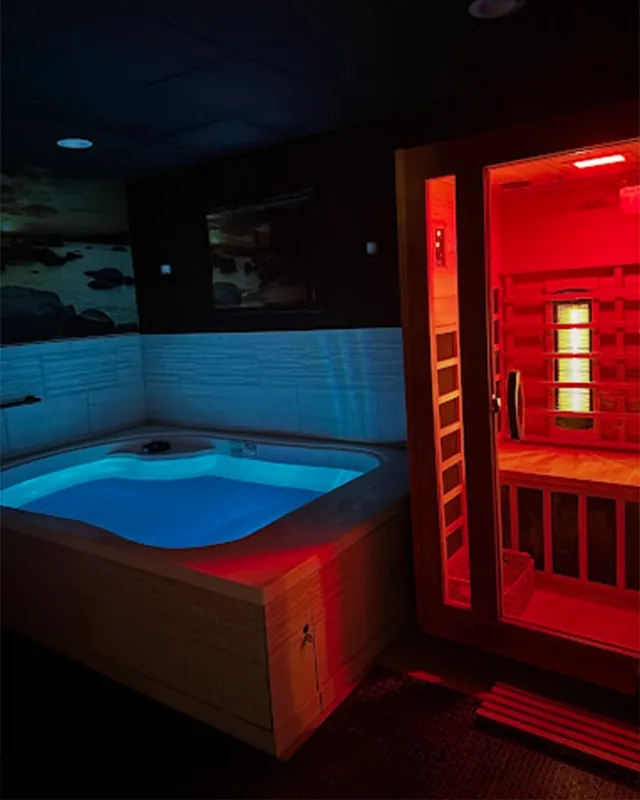
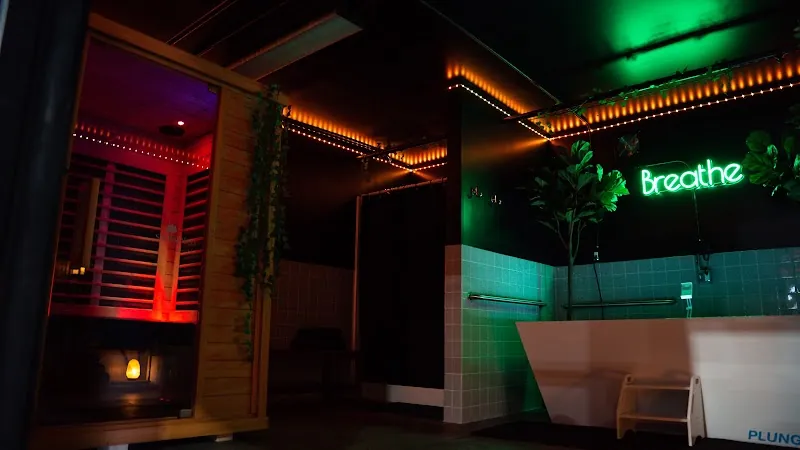
Different types of services exist under the cold therapy umbrella. Traditional ice baths pack a tub with ice and water, usually landing between 39-50°F. Plunge pools at a modern plunge pool spa are temperature-controlled, filtered continuously, and often maintained at whatever target temperature a client requests. Contrast therapy studios alternate between hot and cold exposure, typically cycling between a sauna or hot pool at 170-190°F and a cold plunge at 50-55°F. Whole-body cryotherapy (cryotherapy spas that use nitrogen-chilled air chambers) operates on different physics but triggers similar vascular and inflammatory responses.
Session formats vary by facility. Most cold plunge facilities recommend 2-5 minutes for beginners, with experienced users sometimes going 10-15 minutes at slightly warmer temperatures (55-59°F). Going longer at lower temperatures does not automatically mean better results, the data on dose-response relationships here is still being worked out in the research literature, which is worth remembering when someone tells you 20 minutes at 39°F is the goal.
39-45°F: Advanced/athlete-level cold plunge. Short sessions only (2-4 min). Always with supervision.
45-55°F: Standard range for most professional cold water therapy centers. Good starting point for most adults.
55-59°F: Beginner-friendly. Still physiologically effective. Better for building consistency without excess stress response.
Cold Plunge Safety Guidelines Every Visitor Should Know
Some conditions are flat-out contraindications for cold immersion. Heart arrhythmias, uncontrolled hypertension, Raynaud's disease, peripheral neuropathy, and pregnancy are the main ones. This isn't overly cautious advice, cold water triggers real cardiovascular stress, and for people with compromised cardiac function, that stress can be dangerous. Any reputable cold therapy studio will ask about medical history before your first session. If they don't, that's a red flag.
Pre-session prep matters more than most people think. Hydration is the easy one: show up well-hydrated, because dehydration makes cold stress harder on your cardiovascular system. Avoid alcohol for at least 12 hours beforehand, alcohol impairs your body's ability to regulate temperature from the inside, which directly undermines the whole point. Do not eat a heavy meal within 90 minutes of a session. Light food is fine.
Entry technique is something most beginners skip entirely, and it's arguably the most important safety variable in the room.
Walk in slowly. Don't jump. Sit on the edge first if the pool allows it, get your feet wet, give your nervous system 10-15 seconds to start adjusting before you commit to full immersion. Once you're in, breathe out slowly and deliberately. Your body will try to gasp; resist it. A long, controlled exhale in those first 30 seconds is the single most effective thing you can do to prevent cold shock from escalating. Keep your mouth above water until your breathing normalizes.
Time limits: 2-3 minutes for your first few sessions, full stop. After several weeks of consistent exposure, working up to 5-8 minutes at moderate temperatures is reasonable for healthy adults. Beyond 10 minutes is where the risk-benefit math starts to get murky even for experienced users.
Signs you need to get out immediately: uncontrollable shivering that intensifies (rather than the normal shivering that starts during immersion), loss of coordination, confusion, numbness in hands or feet that doesn't improve, or any chest tightness. Staff at a professional recovery wellness center should be watching for these. If you're somewhere they're not, pay attention yourself.
Post-session, rewarm passively first. A warm (not hot) shower after 5-10 minutes of air drying is fine. Jumping straight into a hot shower right after your plunge blunts some of the physiological benefits, particularly around norepinephrine response. Give yourself 10 minutes of air recovery. Eat something with protein and carbohydrates afterward if you're using cold therapy for athletic recovery, your muscles are primed for nutrient uptake in that window. Wait at least 30-45 minutes before any intense physical activity.
• Diagnosed heart conditions, arrhythmias, or uncontrolled high blood pressure
• Raynaud's disease or other circulatory disorders
• Pregnancy
• Open wounds or active skin infections
• Recent surgery (within 6-8 weeks)
• Current acute illness or fever
If any of these apply, talk to your doctor before booking at any ice bath facility or cold immersion center.
What to Expect at a Professional Cold Plunge Facility
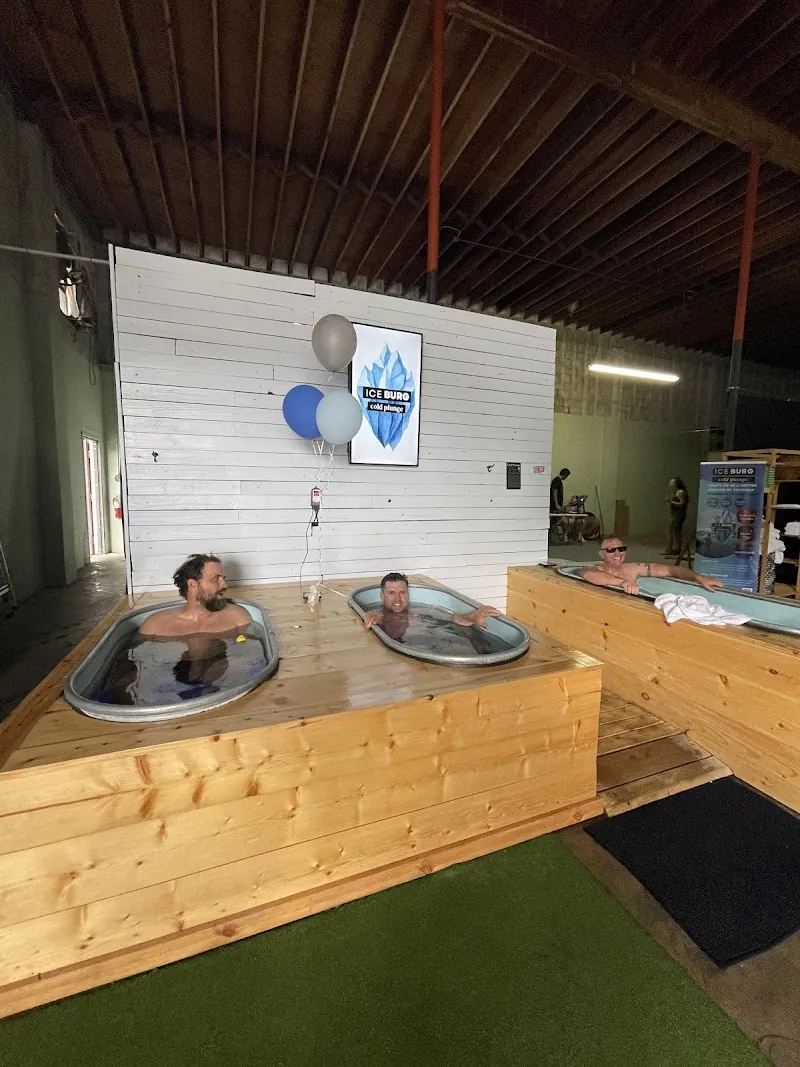
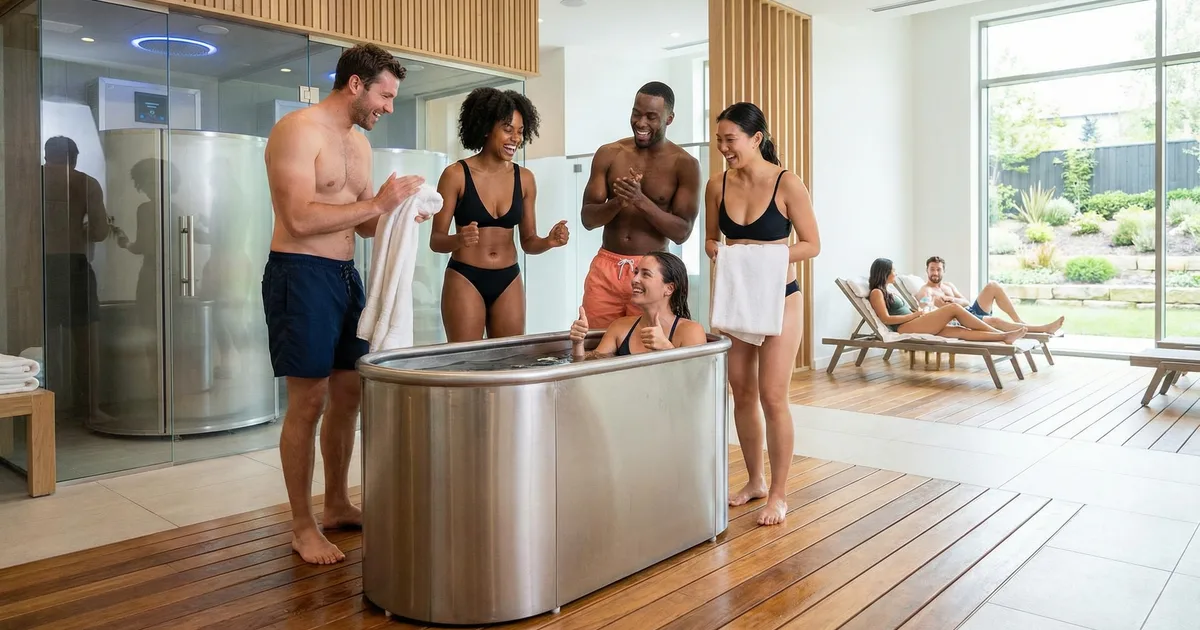
Walking into a legitimate cold plunge facility for the first time can feel a little clinical, and honestly that's a good sign. These are not day spas. Good ones have filtration systems running continuously, visible temperature readouts on each pool, staff who can answer specific questions about their sanitation protocols, and some kind of intake process before you get near the water.
Water sanitation is where at-home cold plunge setups consistently fall short compared to a professional cold water therapy center. High-quality facilities use UV filtration combined with chemical treatment (typically low-level chlorine or ozone-based systems) and cycle water frequently enough that bacterial load stays genuinely low. Ask about their filtration cycle. A good facility will tell you without hesitation. If you get a vague answer or "we change the water regularly," that's not good enough.
Staff qualifications vary more than they probably should across the industry. At minimum, look for staff who are CPR certified and have received training specific to cold water emergency response. Some of the better cryotherapy studios have staff with sports science backgrounds or certifications through organizations like the National Academy of Sports Medicine. Don't be shy about asking. A staff member who gets defensive about credentials is someone you probably don't want supervising your 40°F plunge.
Questions to ask before you commit to a facility:
- What temperature ranges are available, and how are they maintained?
- What's the water filtration and sanitation protocol?
- Are staff certified in CPR and cold water emergency response?
- Do they require a health intake form or medical clearance for new clients?
- What's the maximum session time they allow, and how do they enforce it?
- Is there always a staff member present during sessions?
Good contrast therapy studios will also explain the full protocol before your first session, including how long to spend in each environment and how many cycles to do. That guidance isn't just nice to have, it's part of what you're paying for when you go professional over DIY.
The Cold Plunge Industry by the Numbers: Growth and Availability
1,934 listed businesses. That number is worth sitting with for a moment, because five years ago the cold immersion industry at this scale essentially didn't exist outside of professional sports facilities and a handful of early-adopter wellness boutiques. The growth has been fast.
New York leads the directory with 30 listed facilities. That's not surprising given population density, but the rest of the top-city list is genuinely interesting. Anchorage, Alaska has 25 listed cold plunge businesses, which is a remarkable density for a city of roughly 290,000 people. Omaha comes in at 20, Las Vegas and Albuquerque each at 19. The data tells a different story than the "this is a coastal wellness trend" narrative, cold therapy is spreading into mid-size markets fast.
Ratings are almost uniformly high. Across all 1,934 listed businesses, the average customer rating sits at 4.9 stars. That's not the kind of average you see in most service industries. For context, restaurant averages typically cluster around 4.0-4.3 even for well-regarded spots. A 4.9 average across nearly 2,000 businesses suggests either that cold therapy clients are unusually loyal and positive reviewers (probably partly true) or that the professionalism of these facilities genuinely is high across the board (also probably partly true).
Top-Rated Cold Plunge Businesses
| Business Name | Location | Rating | Reviews |
|---|---|---|---|
| Rock and Armor | Meridian, ID | 5.0 ★ | 1,448 |
| Pain Center of Rhode Island | Cranston, RI | 5.0 ★ | 1,207 |
| Fire & Ice Wellness | Bristol, England | 5.0 ★ | 1,199 |
| Next Health | New York, NY | 5.0 ★ | 1,142 |
| Remède IV Therapy + Aesthetics | Jackson Hole, WY | 5.0 ★ | 948 |
Rock and Armor in Meridian, Idaho is particularly worth noting, 1,448 reviews at a perfect 5.0 in a mid-size city is the kind of volume that indicates genuine community adoption, not just novelty visits. That's a business people are returning to and telling friends about.
One more thing on the geographic spread: Anchorage having 25 facilities is a reminder that cold water culture exists independent of wellness industry marketing. Alaskans have been doing cold water immersion recreationally and culturally for generations. In practice, the industry growing there probably looks different than it does in, say, Las Vegas, where the 19 listed facilities are more likely catering to recovery tourism and the convention crowd.
Best Practices for Getting the Most Out of Your Cold Plunge Sessions
A beginner making their first appointment at a cold immersion center should have one goal: get in, stay calm, and get out without panicking. That's it. Seriously. Don't worry about duration, temperature optimization, or whatever protocol you read about online. Getting comfortable with the initial cold shock response is the entire project for weeks one through three.
Here's a practical progression framework that actually works for most people:
- Weeks 1-2: 55-59°F water, 2-3 minutes per session, 2-3 times per week. Focus entirely on controlled breathing. No breath-holding.
- Weeks 3-4: Drop to 50-55°F if 55°F feels manageable. Extend to 4-5 minutes. Notice how your body responds in the hours after sessions.
- Weeks 5-8: If recovery markers are improving (sleep quality, muscle soreness duration, mood), you can experiment with going cooler or longer, but not both at once.
- Month 3 onward: Most experienced users settle into a routine of 5-10 minutes at 45-55°F, 3-4 times per week. Beyond that is personal preference territory, not necessity.
Consistency beats intensity. A 5-minute plunge at 52°F three times a week for three months will do more for you than sporadic 10-minute sessions at 39°F whenever motivation spikes. Cold adaptation is a real physiological phenomenon, your body gets better at managing the response over time, and that adaptation only happens with regularity.
Combining cold therapy with other recovery modalities is where things get genuinely interesting. Contrast therapy (alternating sauna and cold plunge in cycles) seems to produce stronger cardiovascular benefits than cold alone, based on current evidence. For people who train hard, pairing cold plunge sessions with adequate sleep and good nutrition matters more than any specific plunge protocol. Speaking of nutrition, if you're tracking recovery obsessively but eating poorly, you're leaving most of the gains on the table. Finding affordable, high-quality protein and produce consistently is worth thinking about. Some people on tight budgets use resources like salvage grocery stores to stretch their food budget, which frees up money for services like regular cold therapy sessions that do cost money over time.
Frequency-wise, daily cold plunging is probably unnecessary for most non-athletes and might actually blunt some strength adaptations if you're doing it immediately post-resistance training. 3-4 times per week, ideally timed at least 6 hours after strength sessions, is a reasonable target for most people.
One thing that often surprises first-time visitors to a quality cryotherapy studio or recovery wellness center: the mental component of cold immersion is real and measurable. Norepinephrine, a neurotransmitter associated with focus and mood, spikes dramatically during cold exposure, sometimes 200-300% above baseline. That's not placebo; it's one of the more consistent findings in cold immersion research. Many regular users report improved mood and focus for 2-4 hours post-session. If you're going to a cold plunge facility and timing your sessions strategically, morning plunges before demanding cognitive work make a lot of practical sense.
Keep a simple log for your first 8 weeks: water temperature, duration, time of day, and how you felt 2-3 hours afterward. Patterns emerge fast. Most people find a specific temperature-
Explore Related Directories
The Complete Cold Plunge Guide: Safety, Protocol & Progression
Master cold plunge therapy with safety protocols and progression tips. Ideal for beginners seeking a safe and rewarding cold exposure experience.
Read free preview